Outdoor metalwork in winter: a powder coating checklist for South West buyers
An outdoor display stand may look ready for winter once it has a fresh colour finish. However, the appearance of the coating tells a buyer very little about whether the complete product is suitable for its working environment. Material choice, surface preparation, drainage and the way the finished assembly is handled all matter.
For retail buyers, equipment manufacturers and commercial product teams across Somerset, Devon and Dorset, November is a useful time to review those details. A sheltered entrance in Chard and an exposed coastal site can place different demands on otherwise similar metalwork. This guide focuses on specifying powder coated outdoor products, rather than comparing powder coating with liquid paint.
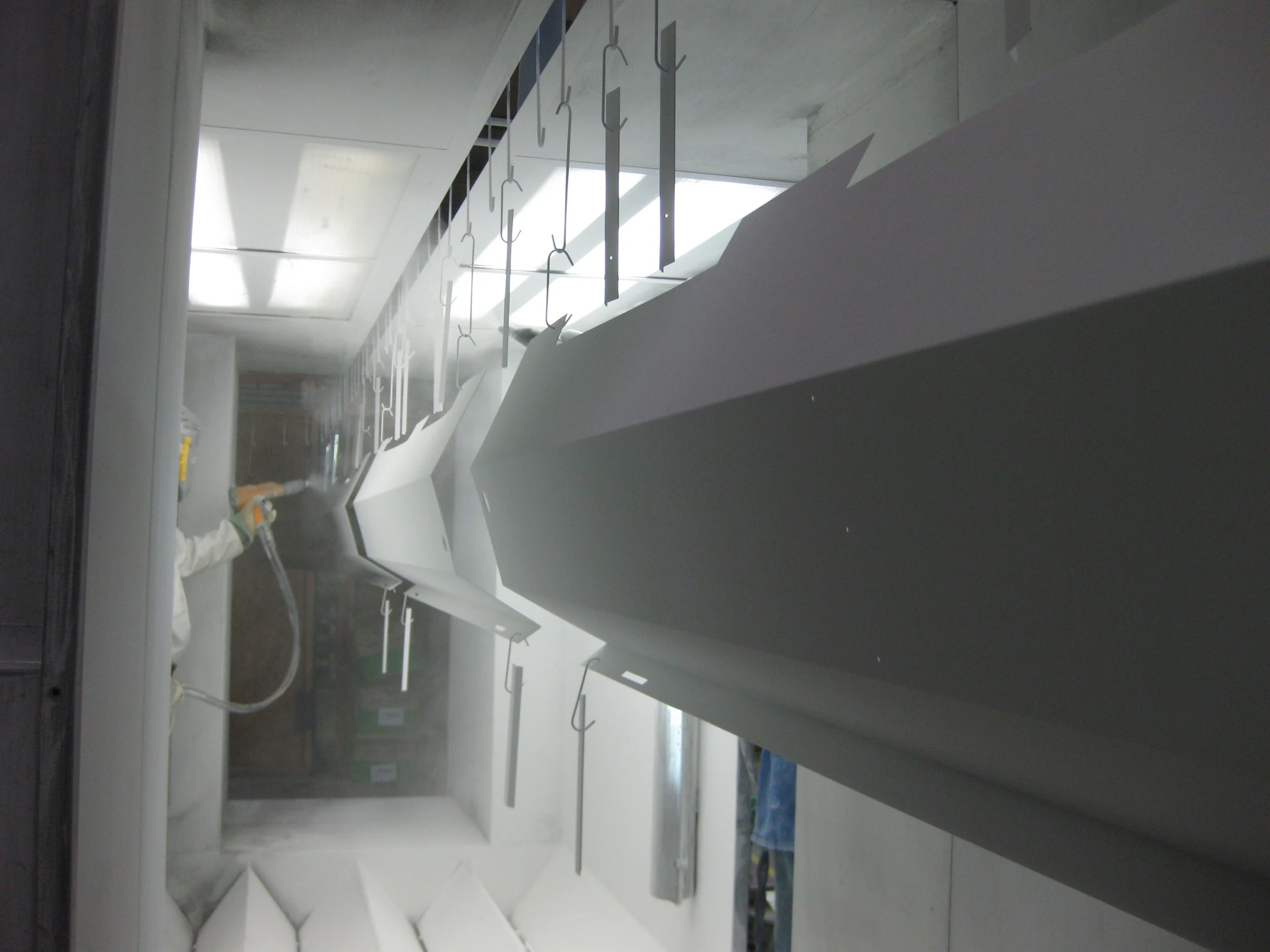
Techrail Retail Services provides powder coating at its Chard facility alongside cutting, forming, fabrication and welding. Keeping those processes together allows the design and finishing requirements to be considered as one manufacturing brief. The following checklist helps buyers ask useful questions before approving a repeat batch.
1. Describe the actual exposure. Do not stop at the word outdoor. Explain whether the product will sit beneath a canopy, remain exposed to rain, encounter road salt or be used near the coast. Include cleaning methods, likely knocks from trolleys and whether water can collect around its feet. These details help the manufacturer assess the substrate, preparation and coating requirements. A colour reference alone is not an exterior performance specification, and no coating should be assumed suitable for every environment.
2. Agree the material and preparation together. Powder coating is a finish, not a way to make unsuitable material suitable for any application. State the metal grade and any existing surface treatment, then ask the manufacturer to confirm the proposed preparation and coating system against the exposure. Oil, contamination and corrosion can affect the finished result if not addressed appropriately. Where corrosion protection is important, agree the requirement and any supporting evidence before ordering. Do not infer a guaranteed service life from a sample that simply looks well finished.
3. Look for places where moisture can remain. Upward facing channels, enclosed corners and overlapping surfaces can retain water or dirt. Review the complete assembly and identify whether drainage or a different detail is needed. Hollow sections can also require discussion of venting, access and the finishing sequence. Do not add holes to a finished design without checking their effect on strength, appearance and function. The useful question is how the component will shed water and dry in its intended position, not whether its visible faces are coated.
4. Review edges, joints and welds before finishing. A sharp edge or an awkward recess may present a different coating challenge from a broad, accessible face. Ask the fabricator to review edge condition, weld finishing and access to difficult areas. If a joint will be assembled after coating, consider whether it creates a water trap or damages the finish when tightened. Agree which surfaces are visible and which are functionally important. Powder coating should follow an agreed fabrication standard rather than be expected to conceal every underlying feature.
5. Specify colour, texture and masking clearly. Give the required colour reference, gloss level and texture, and agree an approval sample where appearance matters. A screen image is not a dependable colour standard. Identify threads, locating faces, electrical contact areas or other features that must remain uncoated. Coating thickness can affect the fit of mating parts, so inspect the assembly in its finished condition where appropriate. For phased retail rollouts, retain the approved finish reference for later batches rather than relying on an informal colour description.
6. Confirm size and handling requirements early. Techrail's powder coating plant handles items up to 3000 x 1500 x 850 mm, subject to review of the complete requirement. Provide the overall fabricated dimensions, including projecting brackets, rather than only the size of the main panel. Discuss lifting, hanging and any acceptable contact points before manufacture. Also confirm how components should be separated during packing. Repeated rubbing between finished surfaces during transport can undermine an otherwise carefully specified product before it reaches its destination.
7. Plan cleaning and inspection as part of ownership. Ask for care instructions suitable for the agreed finish and its exposure. Avoid assuming that aggressive chemicals, abrasive pads or pressure washing will be appropriate. Inspect vulnerable areas such as feet, fixing points and places that receive regular impact. If damage occurs, seek advice on a compatible repair approach rather than covering it with an unspecified product. Coated metalwork still needs maintenance, particularly where contamination or standing water is difficult to avoid.
8. Make repeat orders traceable. Record the drawing revision, material, finish specification, masking instructions and approved sample reference alongside quantities and delivery dates. If an existing product needs recoating, Techrail requires the previous coating to be removed back to bare metal before recoating. Describe its condition and previous finish when enquiring so the requirement can be reviewed. A replacement batch and a refurbishment batch should not automatically be treated as the same job.
Before requesting a quotation, gather drawings or photos, overall dimensions, material details, site conditions, finish requirements, batch quantities and required delivery dates. If drawings are unavailable, Techrail can prepare them in house and review reverse engineering from photos, with dimensions confirmed before manufacture and design work agreed separately.
For businesses in the South West planning outdoor commercial metalwork or repeat product supply, a free initial production review is a practical starting point. Share where the product will be used as well as what it should look like. That gives the production team a clearer basis for reviewing fabrication, finishing and delivery together.